Search
Results
Grants
Students are encouraged to complete a Free Application for Federal Student Aid (FASFA) to be considered for grant opportunities. Some grants may require an application in addition to the FASFA. Many COTC students are eligible for grants to help and/or cover the cost of tuition and in some cases books/supplies. Grants awarded to students do not need to be repaid.
Online Learning and the Online Campus

In a post-pandemic world, we know that there may still be a lot of confusion about different forms of online learning. Let us help clarify our commitment to technology-enhanced higher education.
What exactly do we mean by “Online Campus”?
Central Ohio Technical College has four physical campuses where you can go to take classes, meet with classmates, take advantage of support services like tutoring, or access resources like the library or your academic advisor.
Well, through our Online Campus, you can do many of these same things without having to drive to Coshocton, Knox, Newark or Pataskala! We have invested significantly in technology and human resources that enable us to provide high-quality academic and support services for students across Central Ohio and beyond.
Coming soon: Learn more about the virtual and in-person support services we offer to online campus students
What is the difference between online, hybrid, remote and other formats?
Here’s how COTC defines these formats:
- In-person: Students come to one of our physical campuses and meet with an instructor on a certain day at a certain time (often twice per week).
- Online: Students in these courses do NOT meet on campus at a specified day and time. Course materials and activities are delivered through the college’s web-based learning management system, and students can generally work on their own time (while making sure to meet any due dates set by the instructor). Students learn via recorded lectures, self-directed readings, watching videos, doing research, collaborative work and/or online discussions.
- Hybrid or HyFlex: These courses are a combination of in-person and technology-enhanced class sessions. Hybrid and HyFlex classes typically meet at a regularly scheduled time, but may use Zoom or other video technology to meet remotely (on- or off-campus). Students in these courses often have the option to choose how they want to engage with the instructor and their classmates; individual instructors may have different expectations for participation, and your advisor can help you determine what’s expected.
Which degrees or certificates can I complete online?
Students can complete the following programs COMPLETELY ONLINE:
Associate Degrees
- Associate of Arts, with a concentration in Social Work
- Business Management Technology
- Human Services/Social Work Assistant
Short-term or One-year Certificates
- Accounting: Bookkeeping Certificate
- Business Management: Human Resources Certificate
- Business Management: Management Certificate
- Business Management: Office Administration Certificate
- Health Services: Case Management Healthcare and Gerontology Certificate
- Social Work: Addiction Studies Certificate
- Social Work: Behavioral and Mental Health Technician Certificate
There are several programs at COTC that offer most (but not all) of their required courses in a remote asynchronous (i.e., “online”) format. Students can complete the following degrees or certificates MOSTLY ONLINE:
Associate Degrees
- Associate of Arts with a concentration in Economics
- Associate of Arts with a concentration in Psychology
- Associate of Arts with a concentration in Sociology
- Associate of Science with a concentration in Business
Short-term or One-year Certificates
Many of our degrees and certificates — for example, those in the health sciences, engineering, public services and nursing — do require some in-person learning. However, several of the general education classes required for these degrees can be taken online.
Such classes include:
- English Composition
- Algebra, Calculus or Statistics
- Psychology
- Critical Thinking or Ethics
- Sociology or Cultural Diversity
- Speech or Small Group Communications
Ohio National Guard Scholarship and Military Tuition Assistance (TA)
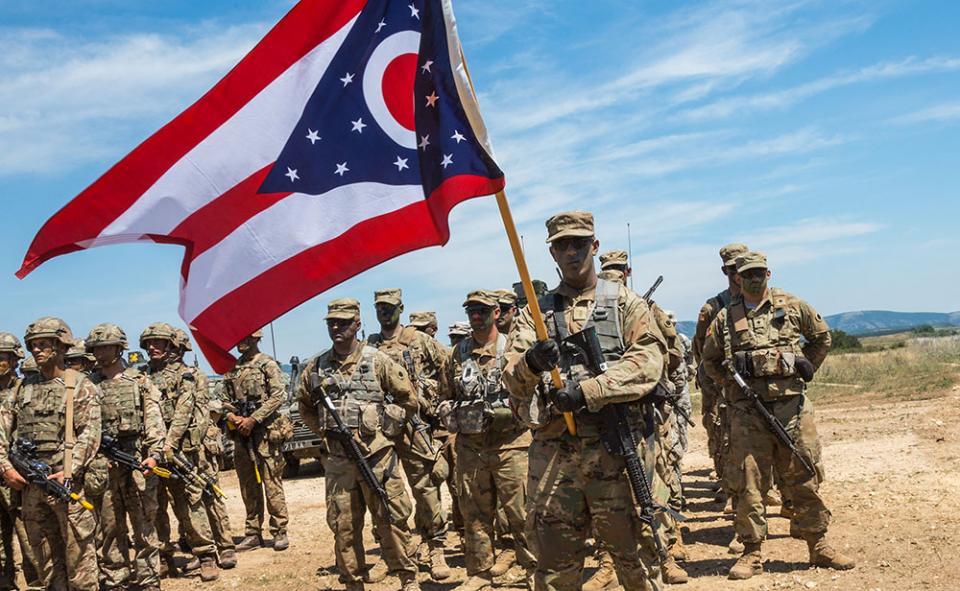
ONGSP will pay the base tuition (general and instructional fees) for Ohio state-assisted colleges and universities. ONGSP scholarships are available for both full-time and part-time students who are actively enrolled in at least three (3) credit hours or more of coursework.
A Police Pipeline
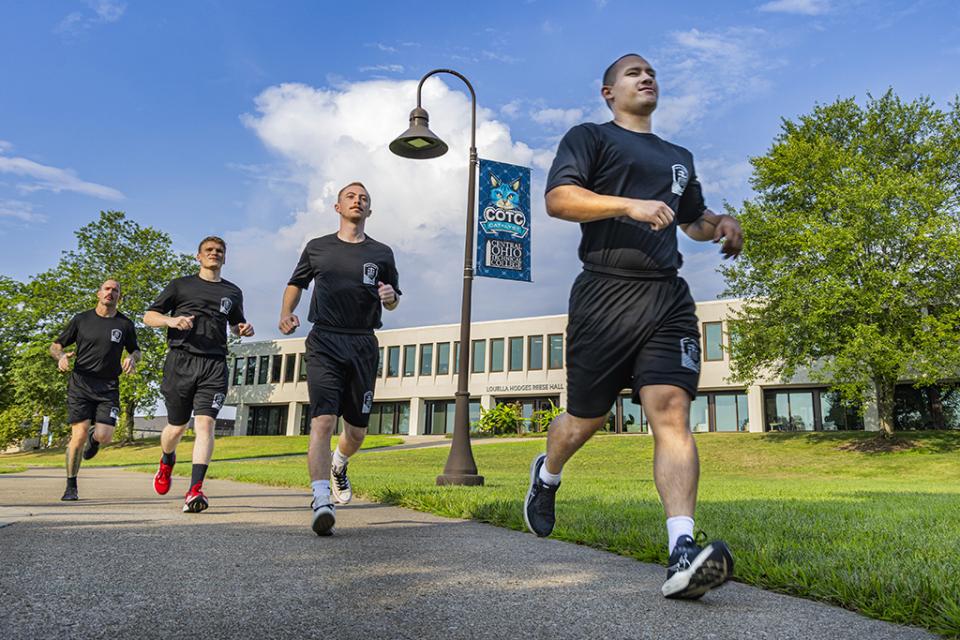
COTC is a catalyst in this community — not only creating change, but continually creating solutions when change happens naturally. An innovative partnership between its Peace Officer Basic Training program and the Licking County Sheriff’s Office (LCSO) is a prominent example of the college’s pragmatic approach.
One Year Certificate Program in Nursing Technology – Practical Nursing
2019-2020 Central Ohio Technical College
Pre-admission Course Requirements for NURPN.1YR Program
The Associate of Applied Science degree program in Nursing Technology is a selection-based program, meaning a student must APPLY to the program and then be SELECTED into the program before being able to meet graduation requirements.
STNA certification required.
Semester 1
|
* Human Biology |
4 |
|
|
* Statistics |
3 |
|
|
* Introduction to Pharmacology |
2 |
|
|
* Fundamentals of Practical Nursing |
5 |
|
|
Total |
14 |
Semester 2
|
* Composition I |
3 |
|
|
* Health Alterations I for the Practical Nurse |
6 |
|
|
* Introduction to Psychology |
3 |
|
|
|
Total |
12 |
Semester 3
|
* Health Alterations II for the Practical Nurse |
6.5 |
|
|
* Maternal/Child Nursing for the Practical Nurse |
4 |
|
|
* Transition to Practice for the Practical Nurse Student |
1 |
|
|
|
Total |
11.5 |
Total Hours Required
- Total Hours Required for Degree: 37.50
Helpful Information
-
* Courses may have prerequisites. Please check course description to view all course prerequisites and requirements.
-
All courses require a grade of C (2.00) or better in order to progress and graduate from this program.
-
This program is 42 weeks in length.
The College Reserves the Right to Change Curricula Without Notice
Published date – January 2019
Office of Academic Affairs
Emergency Medical Services Certificate Plan – Emergency Medical Technician Certificate
2019-2020 Central Ohio Technical College
Central Ohio Technical College offers an Emergency Medical Technician course for those persons interested in seeking initial EMS certification.
| Emergency Medical Technician |
7 semester credit hours 9 contact hours (6 hours lecture and 3 hours lab) |
Course Description
7 credit hours, 9 contact hours (6 hours lecture and 3 hours lab)
Prerequisite: CPR Certification (Recommended), C grade (2.00) or better in GENR-091 and MATH-080 (or appropriate score on COMPASS placement). Course is graded A-F.
The EMS-120 Emergency Medical Services course covers all aspects of emergency medical care in the field including equipment, controlling the situation, anatomy and physiology, medical and trauma emergencies, and airway control. This course at its successful completion allows the student to take the national registry exam to become certified at the EMT Level. This course provides a first phase of training in the career structure of the Emergency Medical Technician (EMT). The course covers all knowledge and skills required for the national certification examination. Course includes 15 clock hours of clinical experience. A student must pass the class with a B- grade (3.00) or better and a minimum of 70 percent on the final exam in order to graduate and be eligible to sit for the NREMT exam.
Helpful Information
-
EMS-120 meets Ohio CTransfer (C-Tag) Assurance Guide standards for course CTEMTB002.
-
This “program” is not currently eligible for Title IV financial aid.
The College Reserves the Right to Change Curricula Without Notice
Published date – January 2019
Office of Academic Affairs
Law Enforcement Technology – Evening Peace Officer Basic Training
2018-2019 Central Ohio Technical College
Autumn Semester
|
* Administration |
2 |
|
|
Criminal Law |
4.5 |
|
|
Human Relations |
3 |
|
|
Subject Control |
2 |
|
|
* Homeland Security |
2 |
|
|
* Wellness I |
1.5 |
|
|
|
Total |
15 |
Spring Semester
|
* Investigations |
2 |
|
|
First Aid |
0.5 |
|
|
* Patrol |
4 |
|
|
Firearms |
2 |
|
|
* Traffic |
3.5 |
|
|
Driving |
1.5 |
|
|
Wellness II |
1.5 |
|
|
|
Total |
14.5 |
Total Hours Required
- Total Hours Required For Degree: 29.00
Helpful Information
-
Students enrolled in the Accelerated POBT Academy while pursuing the Law Enforcement Degree Program are eligible for financial aid.
-
Courses may have prerequisites. Please check course description to view all course prerequisites and requirements.
-
* Indicates a grade of C (2.00) or better is required in all Law Enforcement Technology courses to proceed in subsequent Law Enforcement, Criminal Justice and Public Service courses and to graduate from the Law Enforcement Technology program.
-
This program is 15 weeks in length.
Admission Requirements
The Basic Police Academy program has been designed to meet the requirements of the Ohio Peace Officer Training Commission for Police Academies. There are specific admission requirements which must be met before a student will be admitted to this program. Successful graduates of this program will be recommended to take the state certification examination. Cadets that successfully complete this program will receive a letter of completion (for open enrollment students) or a certificate (if a commissioned officer from OPOTC) and will be eligible to gain employment as a police officer, deputy sheriff, or armed security officer.
All cadets are required to have a physical examination and a fingerprint check completed at least 21 days prior to the start of each Academy (no cadets will be accepted after this deadline). The physical examination WILL BE AT THE CADET’S EXPENSE. Fingerprint checks are required for ALL CADETS (persons convicted of a felony or domestic violence are not eligible for this program). Instructions for fingerprinting are provided by the Academy only (see Academy Commander). The cadet is responsible for required uniform expenses.
Interested students must submit a completed COTC Application form and contact the COTC Gateway Admissions Office for additional admissions requirements. Once accepted students must pay a one-time non-refundable Acceptance Fee of $40.00. Cadets pay standard per semester credit hour tuition charges as set forth by the College (listing of tuition and fees available from the Gateway Admissions Office). Students will also be charged for ammunition (currently $250.00 one- time charge – ammunition prices are subject to change without notice due to price changes by the manufacturer). Individually owned firearms or purchased ammunition will not be permitted on the firing range during class times.
The Ohio Revised Code, Administrative Code Rule 109.2-1 provides 1) for the power of the School Commander to enact rules and regulations which establish a higher standard of training than the minimum required; and 2) for the termination of the services of unsatisfactory students during or upon completion of the pre-school training period.
The College Reserves the Right to Change Curricula Without Notice
Published date – January 2017
Office of Academic Affairs
Diagnostic Medical Sonography Technology – Specialty Modalities
2018-2019 Central Ohio Technical College
Pre-Admission Course Requirements for DMSSM.AAS Program
Course requirements or with permission of the program director: The Diagnostic Medical Sonography Specialty Modalities AAS program is a selection-based program, meaning a student must APPLY to the program and then be SELECTED into the program before being able to meet graduation requirements. Concurrent enrollment in DMS AAS-G / AASCV programs or Registered/Credentialed RDMS, RVT, RVS, RDCS, RCS sonographer.
Autumn Semester
|
* Composition I |
3 |
|
|
* Basic Chemistry |
4 |
|
|
* Pre-Calculus |
5 |
|
|
|
Total |
12 |
Spring Semester
|
* Composition II |
3 |
|
|
* Critical Thinking |
3 |
|
|
* Introduction to Psychology |
3 |
|
|
* Small Group Communications |
3 |
|
|
|
Total |
12 |
Autumn Semester
|
* Survey of Abdominal |
3 |
|
|
* Survey of Vascular |
3 |
|
|
* Abdominal Techniques Scan Lab |
2 |
|
|
* Vascular Techniques Scan Lab |
2 |
|
|
* Cultural Diversity |
3 |
|
|
|
Total |
13 |
Spring Semester
|
* Survey of Echocardiography |
3 |
|
|
* Fetal, Neonatal & Ped Echo |
3 |
|
|
* Echo Techniques Scan Lab |
2 |
|
|
* Vascular Techniques Scan Lab II |
2 |
|
|
|
Total |
10 |
Summer Semester
|
* Abdominal Vascular Disease & Testing |
4 |
|
|
* Survey of Musculoskeletal |
4 |
|
|
* Abd. Vasc. Tech Scan Lab |
2 |
|
|
* Electrophysiology |
3 |
|
|
|
Total |
13 |
Total Hours Required
- Total Hours Required For Degree: 60.00
Helpful Information
* Courses may have prerequisites. Please check course description to view all course prerequisites and requirements.
All courses require a grade of C (2.00) or better in order to progress and graduate from this program.
The College Reserves the Right to Change Curricula Without Notice
Published date – August 2018
Office of Academic Affairs