Search
Results
Chase Ghiloni
COTC Alumnus Accepts New Role as Vice President at First Federal Savings

When Chase Ghiloni graduated from Newark High School in 2001, he didn’t think college was all that important. These days he has a different opinion. Ghiloni is now the vice president of marketing at First Federal Savings in Newark, Ohio, and credits his success to his digital media design degree from Central Ohio Technical College (COTC). “I was never really the college type. I never really applied myself in high school. I just wanted to get it over with and move on,” said Ghiloni. “But, after being out of high school for a few years, I wanted more.
You’re hired. Now what?
- Qualified candidates will be extended a conditional offer of
employment via email to teach for COTC, and a new hire packet
will be sent via email for completion. Note, the new hire process
at COTC includes a background check to include but is not limited
to FBI/BCI, references, pre-employment drug testing where
applicable, etc.
- After new hire paperwork is complete, new instructors will
receive instructions on how to set up their COTC account to
access email, online instructor orientation, and teaching tools
and resources.
- Part-time faculty receive a contract/agreement for each
semester they teach outlining the details of teaching load and
compensation.
- Current faculty will reach out to new faculty to welcome them to their teaching team and provide them with course-specific information to help ensure consistent and quality instruction.
Transferring After COTC
Transfer Credit Information
 The Ohio Department of Higher Education
(ODHE) created Transfer Assurance Guides (TAGs) and Ohio Transfer
36 as resources to help students, parents and college and
university personnel identify courses with a statewide guarantee
of transfer between Ohio colleges and universities.
Career-Technical Credit Transfer (CT)² allows transfer of high
school and adult career-technical credit to college credit.
The Ohio Department of Higher Education
(ODHE) created Transfer Assurance Guides (TAGs) and Ohio Transfer
36 as resources to help students, parents and college and
university personnel identify courses with a statewide guarantee
of transfer between Ohio colleges and universities.
Career-Technical Credit Transfer (CT)² allows transfer of high
school and adult career-technical credit to college credit.
Robert A. Barnes, PhD
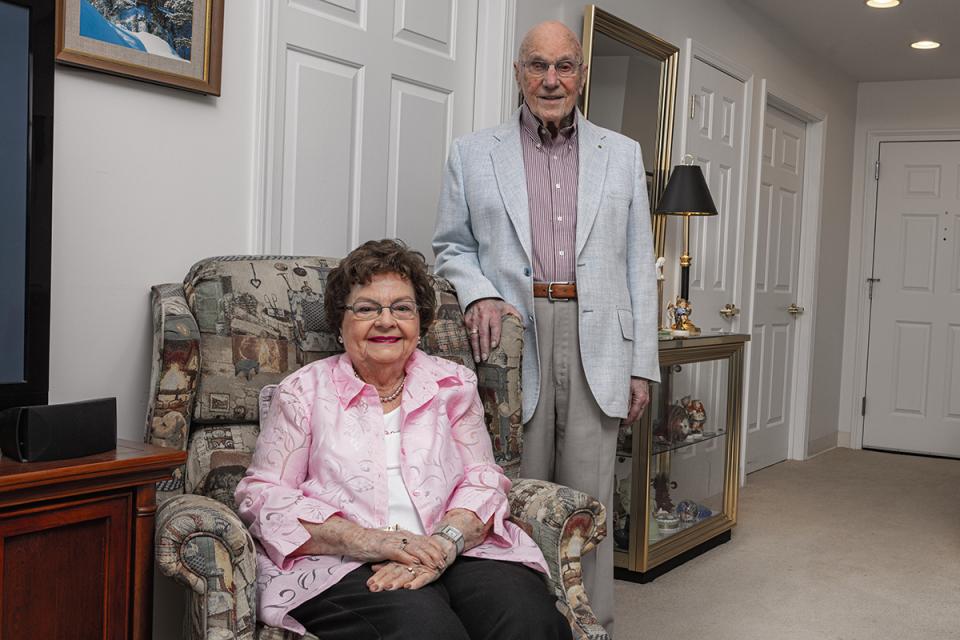
As COTC’s first president, Robert A. Barnes laid the foundation for the newly chartered technical school. In retirement, his legacy continues with a planned gift and membership in the 1971 Legacy Society.
Blue Line Superhero Run
5K, 10K and 1-Mile Family Fun Run
The Blue Line Superhero Run, a collaboration between COTC and the Licking County Sheriff’s Office (LCSO), honors law enforcement personnel as they begin National Police Week. Proceeds from the Blue Line Superhero Run will benefit COTC’s Officer Thomas W. Cottrell Jr. Award for Character and Dedication to Public Service and the LCSO’s Stuff the Backpack fund.
Frequently Asked Questions
Can I take classes online or face-to-face?
The IT Specialist short-term certificate is primarily offered face-to-face.
The IT Specialist one-year certificate is primarily offered face-to-face, although the general education courses can be completed online.
How quickly can I complete an IT Specialist certificate?
The IT Specialist short-term certificate takes two semesters to complete at part-time enrollment.
The IT Specialist one-year certificate takes four semesters to complete at part-time enrollment.
What type of financial assistance is available to help me pay for college?
COTC awards $1 million in scholarships to students each year.
Every student is encouraged to complete a Free Application for Federal Student Aid (FAFSA) to be considered for grants, scholarships and loans.
Students who complete a FAFSA are automatically considered for some scholarships. Other scholarships require an application.
Connect with the Office of Student Financial Services at 740.366.9435 or email NWK-studentfinancialservices@mail.cotc.edu.
Can I pursue an associate degree after I complete the certificate?
Students are encouraged to continue with COTC and complete an associate degree in information technology.
How do I get started at COTC?
Help us learn more about you by visiting our Future Students webpage, then follow the COTC Steps to Enroll to get started.
Student Loans
Loans are a form of financial aid that many students use to help meet the Cost of Attendance that is not covered by scholarships, grants or other personal resources. When thinking about loans, keep in mind that, unlike grants and scholarships, loans accrue interest and must be repaid even if the student does not complete the program and/or does not find employment in his area of study.
Frequently Asked Questions
What are the requirements for the Fire with EMT Certificate Program?
Ohio Fire Academy (OFA)
A OFA Fire Science checklist can help students keep track of the program requirements.
CTEC
A C-TEC Fire Science checklist can help students keep track of the program requirements.
Can I take classes online or face-to-face?
The Fire with EMT certificate program includes hands-on learning and some classes are taken face-to-face. There are some online courses that can be taken as part of the Fire with EMT certificate program.
Can I pursue an associate degree after I complete the certificate?
Yes, students who complete the Fire with EMT Certificate are encouraged to continue their education because they have already earned credits toward the Associate of Applied Science in Fire Science Technology degree.
How do I get started at COTC?
Help us learn more about you by visiting our Future Students webpage, then follow the COTC Steps to Enroll to get started.
Counseling Services Staff
Students experience a wide variety of concerns during their time at college. The Office of Student Life’s Counseling Services staff can be a helpful resource in identifying their mental health needs.
Charles DePriest, MA, LPCC-S
Lead Mental Health Counselor
740.755.7349
depriest.17@mail.cotc.edu
Pronouns: (he/him/his)
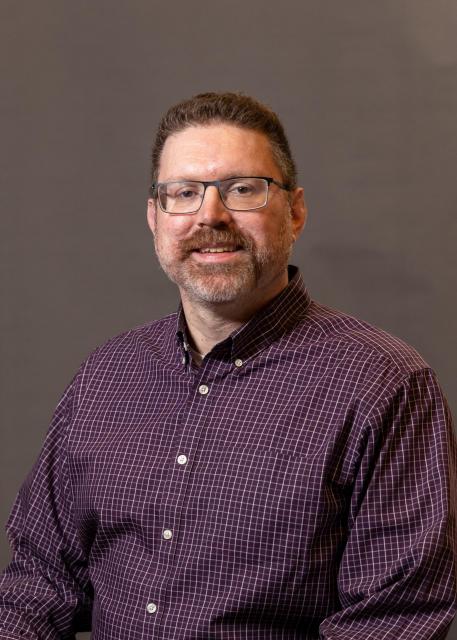
Charles DePriest is a licensed professional clinical counselor in the state of Ohio. He attended Ashland Theological Seminary earning his master’s degree in Clinical Pastoral Counseling, and attended Mount Union University for his undergraduate degree. Charley has 20 years of experience as a counselor working in numerous settings including residential treatment, private practice and community mental health. Most recently, he worked at Columbus State Community College serving as a counselor and then as a supervisor to the Counseling Services Department. He uses a number of different treatment modalities including cognitive behavioral therapy, a client centered focus, brief solution focused therapy and motivational interviewing. He is also experienced in crisis intervention and in helping client’s begin treatment in drug and alcohol counseling. He enjoys working with college students, meeting them where they are at, and providing support and direction to promote their interpersonal growth and increased well-being.
Kathleen Reed, LPCC-S
Mental Health Counselor
740.755.7053
reed.2217@mail.cotc.edu
 Katie Reed is a licensed professional
clinical counselor in the state of Ohio. She completed her
bachelor’s degree in psychology at The Ohio State University in
2003, and her master’s degree in community counseling at Ohio
University in 2005. Katie has worked in a community mental health
setting as well as a contract counselor in schools. Prior to this
position, she worked in a private practice in Lancaster for 14
years. She has worked with clients aging from children to adults,
but especially enjoys working with young adults. Katie draws on
several clinical approaches in her counseling. She primarily
works from a cognitive-behavioral perspective but also integrates
strategies from dialectical-behavioral therapy, as well as
polyvagal-informed therapies. Katie enjoys supporting clients as
they work toward making positive steps in their lives and
believes that even small changes can make a difference.
Katie Reed is a licensed professional
clinical counselor in the state of Ohio. She completed her
bachelor’s degree in psychology at The Ohio State University in
2003, and her master’s degree in community counseling at Ohio
University in 2005. Katie has worked in a community mental health
setting as well as a contract counselor in schools. Prior to this
position, she worked in a private practice in Lancaster for 14
years. She has worked with clients aging from children to adults,
but especially enjoys working with young adults. Katie draws on
several clinical approaches in her counseling. She primarily
works from a cognitive-behavioral perspective but also integrates
strategies from dialectical-behavioral therapy, as well as
polyvagal-informed therapies. Katie enjoys supporting clients as
they work toward making positive steps in their lives and
believes that even small changes can make a difference.
Mackenzie Conley, LPCC
Mental Health Counselor
740.755.7133
conley.462@osu.edu
 Mackenzie Conley is a licensed
professional clinical counselor. She earned her master’s degree
in clinical and mental health counseling at the University of
Dayton and a bachelor’s degree in psychology from The
Ohio State University. Throughout her career in private
practice, Mackenzie has embraced an eclectic approach to therapy,
incorporating a variety of techniques to create personalized and
effective treatment plans for each client. Utilizing a
trauma-informed approach, she empowers clients to build
self-awareness and address problematic behaviors. Mackenzie is
particularly passionate about helping individuals break free from
people-pleasing tendencies and self-sabotaging patterns, guiding
them toward authenticity. She is level II trained in EMDR (Eye
Movement Desensitization Reprocessing), a psychotherapy designed
to help clients process and heal from traumatic experiences.
Mackenzie looks forward to helping students to discover their
inner strength to overcome challenges and be the very best
version of themselves.
Mackenzie Conley is a licensed
professional clinical counselor. She earned her master’s degree
in clinical and mental health counseling at the University of
Dayton and a bachelor’s degree in psychology from The
Ohio State University. Throughout her career in private
practice, Mackenzie has embraced an eclectic approach to therapy,
incorporating a variety of techniques to create personalized and
effective treatment plans for each client. Utilizing a
trauma-informed approach, she empowers clients to build
self-awareness and address problematic behaviors. Mackenzie is
particularly passionate about helping individuals break free from
people-pleasing tendencies and self-sabotaging patterns, guiding
them toward authenticity. She is level II trained in EMDR (Eye
Movement Desensitization Reprocessing), a psychotherapy designed
to help clients process and heal from traumatic experiences.
Mackenzie looks forward to helping students to discover their
inner strength to overcome challenges and be the very best
version of themselves.
Resources for Hiring Managers
Hiring Guide
Hiring Guide for Supervisors and Search Committee Members
PeopleAdmin User’s Guide
A complete user's guide with step-by-step instructions and screen shots is available here.
Hiring-manager resources
Federal Laws Affecting the Hiring & Selection Process
Sample Resume Screening Tools
Sample Telephone Prescreen
Interview Guidelines
Interviewing Do's and Don'ts
Interview Coordinating Tracker
Sample Interview Questions
Sample Interview Guide
Sample Candidate Evaluation Forms
Managers Guide to Onboarding
Managers Onboarding Checklist