Search
Results
Frequently Asked Questions
What is the difference between engineering and engineering technology?
Engineering and engineering technology are separate but closely related professional areas.
Engineering technology programs are more practical than theoretical in nature, focusing on application and implementation. Graduates of two-year engineering technology programs likely assume engineering technician positions in maintenance, production or product development.
Engineering programs often focus on theory and conceptual design, and typically require additional higher-level mathematics. Graduates from engineering programs often pursue entry-level work involving conceptual design or research and development.
Can I take classes online or face-to-face?
Students at COTC have the flexibility to take classes face-to-face or online. The engineering technology program has courses that must be completed face-to-face for students to learn through hands-on experience using equipment and technology in the engineering technology program.
What type of financial assistance is available to help me pay for college?
COTC awards $1 million in scholarships to students each year.
Every student is encouraged to complete a Free Application for Federal Student Aid (FAFSA) to be considered for grants, scholarships and loans.
Students who complete a FAFSA are automatically considered for some scholarships. Other scholarships require an application.
Connect with the Office of Student Financial Services at 740.366.9435 or email NWK-studentfinancialservices@mail.cotc.edu.
Can I pursue a bachelor’s degree after I complete an associate degree?
Students interested in continuing their education to pursue a bachelor’s degree can consider transferring to a four-year college or university. Many of COTC’s general education courses are transferrable to public universities in Ohio. Some universities also accept transfer credit of technical courses in engineering technology. Graduates may consider:
How do I get started at COTC?
Help us learn more about you by visiting our Future Students webpage, then follow the COTC Steps to Enroll to get started.
Coshocton Campus Location
The Coshocton campus is located in historic Roscoe Village just west of State Route 16 in Coshocton County.
Address:
Montgomery Hall
200 North Whitewoman Street
Coshocton, OH 43812
Building Hours:
Monday–Thursday: 7:45 a.m.–9 p.m.
Friday: 7:45 a.m.–5 p.m.
Saturday–Sunday: Closed
Building Staff:
Alan Roberts
Building Supervisor
Chris Norman
Assistant Building Supervisor
Timothy Young
Business Management Technology
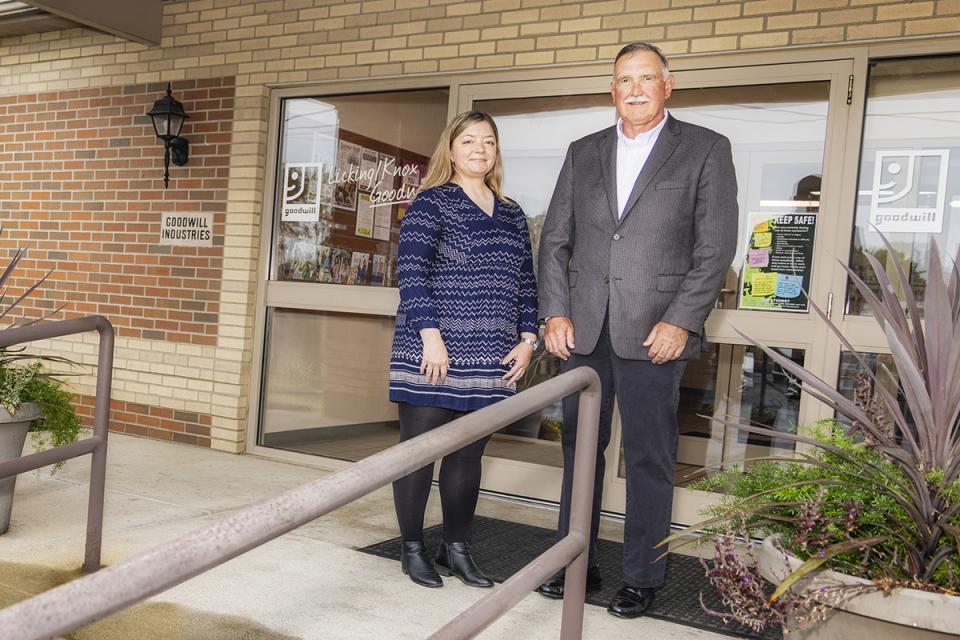
Young graduated in 1990. A few years later, one of his former professors asked him to sit on the board for the nascent Licking/Knox Goodwill Industries. He sat on the board from 1995 to 2008 and is now the company’s president and CEO, a position he accepted in 2011. “I got started here purely by the instructor and connection I had made at COTC.”
Veterans Emergency Fund

The Veterans Emergency Fund will provide financial assistance for veterans, active duty service members and reservists for expenses caused by unforeseen circumstances that threaten their academic progress and are not covered by military educational benefits or scholarships.
What our alumni say about COTC
COTC did a great job of preparing me for my career. There was a lot of hands-on training… The students that graduate from COTC go right into jobs and are very prepared. They are the ones that are going to advance and make a good wage.
—Jennifer McDonald, president and chief executive officer, Licking County Chamber of Commerce
COTC played a huge role in my career by opening the doors to continued education. It feels great to be back in Newark because it is giving me the chance to apply my work experience in school finance to a great community like Newark and at the same time feel like part of the success of a great school system.
—Julio Valladares, treasurer, Newark City Schools
My degree from COTC really opened the door for me to have a great career, and as I grew professionally, I then obtained my bachelor’s degree and a master’s degree.
—Jennifer Ellis-Brunn, director, Licking County Job & Family Services
A Bred-in-the-Bone Curiosity
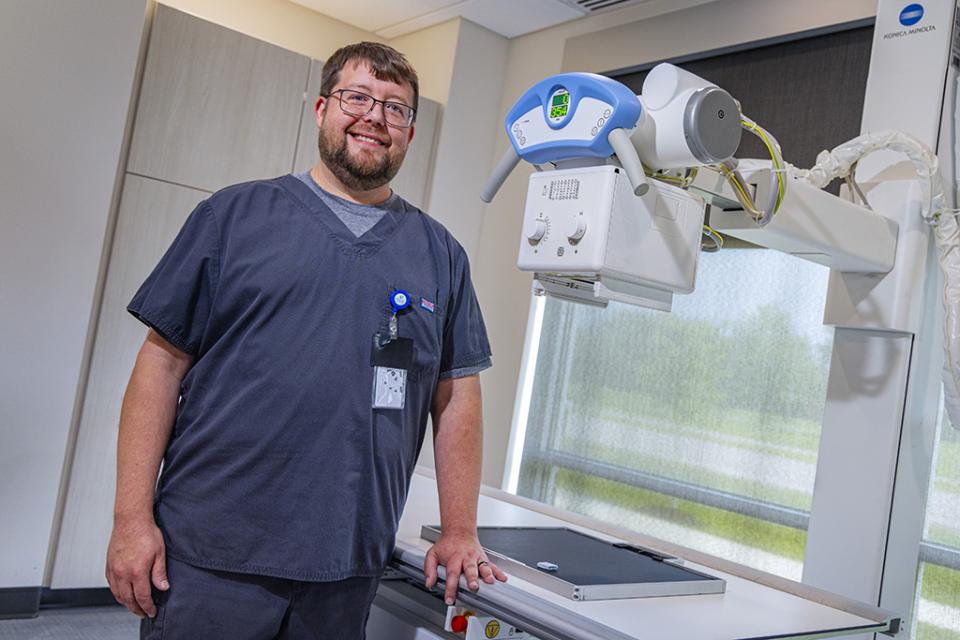
Shaun Lewis’ life was shaped by a couple of car crashes. His perseverance since has shaped the strength, spirit and success he displays today.
Surgical Technology Degree Plan – Surgical Technology
2019-2020 Central Ohio Technical College
Pre-Admission Course Requirements
The Associate of Applied Science degree program in Surgical Technology is a selection-based program, meaning a student must APPLY to the program and then be SELECTED into the program before being able to meet graduation requirements.
A grade of C (2.00) or better is required for all Surgical Technology, Anatomy and Physiology, Microbiology, and Medical Terminology courses in order to continue in and graduate from the Surgical Technology program.
Policies of the Surgical Technology program which are unique in regard to admission, re-admission, grading, and promotion are available in the Surgical Technology Student Handbook, Division of Health Technologies.
All Surgical Technology core courses (Didactics Only) are offered online.
Autumn Semester
|
* Anatomy & Physiology I |
4 |
|
|
Medical Terminology |
2 |
|
|
* Introduction to Statistics or College Algebra |
3 |
|
|
* Basic Surgical Technology |
5 |
|
|
* Basic Surgical Technology Lab |
3 |
|
|
|
Total |
17 |
Spring Semester
|
* Anatomy & Physiology II |
4 |
|
|
* Composition I |
3 |
|
|
* Pharmacology for Surgical Assisting |
1 |
|
|
* Surgical Procedures I |
4 |
|
|
* Surgical Procedures I Clinical |
3 |
|
|
|
Total |
15 |
Summer Semester
|
* Microbiology |
4 |
|
|
* Composition II |
3 |
|
|
* Surgical Procedures II |
4 |
|
|
* Surgical Procedures II Clinical |
3 |
|
|
|
Total |
14 |
Autumn Semester
|
* Critical Thinking |
3 |
|
|
* Introduction to Psychology |
3 |
|
|
Small Group Communications |
3 |
|
|
* Advanced Surgical & Specialty Surgical Practice |
3 |
|
|
* Basic Surgical Technology Professional Trends & Issues in Surgical Practice Seminar |
3 |
|
|
* Professional Trends & Issues in Surgical Practice Clinical |
3 |
|
|
|
Total |
18 |
Total Hours Required
- Total Hours Required For Degree: 64.00
Helpful Information
* Courses may have prerequisites. Please check course description to view all course prerequisites and requirements.
The College Reserves the Right to Change Curricula Without Notice
Published date – January 2019
Office of Academic Affairs
Engineering Technology Certificate Plan – Architectural Computer Aided Drafting Certificate
2019-2020 Central Ohio Technical College
Autumn Semester
|
~ CAD Fundamentals |
2 |
|
|
3D Design with SketchUp |
2 |
|
|
Technical Drawing |
2 |
|
|
Introduction to Engineering Technologies |
1 |
|
|
PC Applications in Business |
3 |
|
|
|
Total |
10 |
Spring Semester
|
* Advanced CAD |
2 |
|
|
* Revit Architecture |
2 |
|
|
* Architecture I |
3 |
|
|
|
Total |
7 |
Total Hours Required
- Total Hours Required For Certificate: 17.00
Helpful Information
* Courses may have prerequisites. Please check course description to view all course prerequisites and requirements.
~ Indicates this course requires a grade of C (2.00) or better in order to graduate from this program.
This program is 30 weeks in length.
The College Reserves the Right to Change Curricula Without Notice
Published date – January 2019
Office of Academic Affairs
Nursing Technology Certificate Plan – State Tested Nurses Aide
2018-2019 Central Ohio Technical College
Pre-Admission Requirements
Must be 16 years of age or older to enroll. A two-step Mantoux test for tuberculosis must be completed by the first day of class. A criminal background check (BCI) is required within six months of starting this course. Results must be available by the first day of the class. Students are required to wear a specified uniform. Course is graded on an A-F basis.
ADDITIONAL REQUIREMENTS for students registering in the Coshocton Campus sections of this course:
- A complete health physical must be completed by the first day of class. The Coshocton Campus Autumn Healthcare student will receive a booklet the first day of class which the student will keep as a reference.
ADDITIONAL REQUIREMENTS for students registering through COTC for the course at C-TEC includes:
- All students must either complete or place out of GENR-090 Integrated Reading and Writing I. Students must take a copy of their high school transcript, diploma or G.E.D. with them the first day of class.
This course prepares a basic health care worker with skills required by the Training and Competency Evaluation Program (TCEP) prior to gaining eligibility to become a State Tested Nurse Aide (STNA) and/or to employment as a home health aide. Content includes communication, infection control, safety and emergency procedures, promoting residents’/clients’ independence, respecting residents’/clients’ rights, basic nursing skills, personal care skills, providing care in a home setting, mental health and social service needs and basic restorative services. College lab permits development of various basic nursing skills. These skills are then implemented during a clinical experience in a local health care facility.
Requirements for this Certificate
Ohio Department of Health Requirements
- Attendance at the first 16 hours of the course is mandatory in order to continue in the course.
- A physical examination (within the last six months).
- A two-step Mantoux TB test prior to the first clinical.
- Attendance in lecture, college lab and clinical equal to 75 hours.
Central Ohio Technical College Requirements
- Professional uniform and shoes are required to attend off-campus clinical settings.
- Identification badge issued by COTC to be worn during all clinical experiences.
- Own transportation is required to attend off-campus clinical settings.
- Clinical times may vary from scheduled class time.
- State testing examination is available at completion of course; cost is determined by the testing company.
- Applicants to the COTC Nursing programs must be certified with STNA.
Course Goals/Objectives of this Certificate
- Identify Ohio Department of Health requirements for State Tested Nurse Aide (STNA) and requirements for home health aides.
- Discuss aspects of communication important to nurse aides.
- Identify important reasons for infection control procedures.
- Discuss safety and emergency precautions.
- Explain ways to promote the client’s independence.
- Identify legal rights of the nursing home resident and home care client.
- Complete basic nursing care skills at a satisfactory level.
- Discuss theory related to performing basic nursing care skills.
- Identify needs of an aging resident relating to mental health and social services.
- Recognize basic restorative services available to nursing home residents and disabled clients in the home.
- Discuss important differences between care in a nursing facility and care in the client’s home.
Attendance Policy
- Clinical site orientation is mandatory.
- All lab returns must be completed prior to the clinical experience.
- A total of 80 hours in attendance, including class, lab, and clinical, is required to receive a passing grade in this course and a completion certificate from the Ohio Department of Health.
Employment Opportunities
- Employment opportunities are available in long-term care facilities, hospitals, assisted living facilities, residential care facilities, and home health care settings.
Courses
|
Basic Health Care Skills |
3.5 |
Helpful Information
-
This “program” is not currently eligible for Title IV financial aid.
-
* Courses may have prerequisites. Please check course description to view all course prerequisites and requirements.
The College Reserves the Right to Change Curricula Without Notice
Published date – January 2018
Office of Academic Affairs